

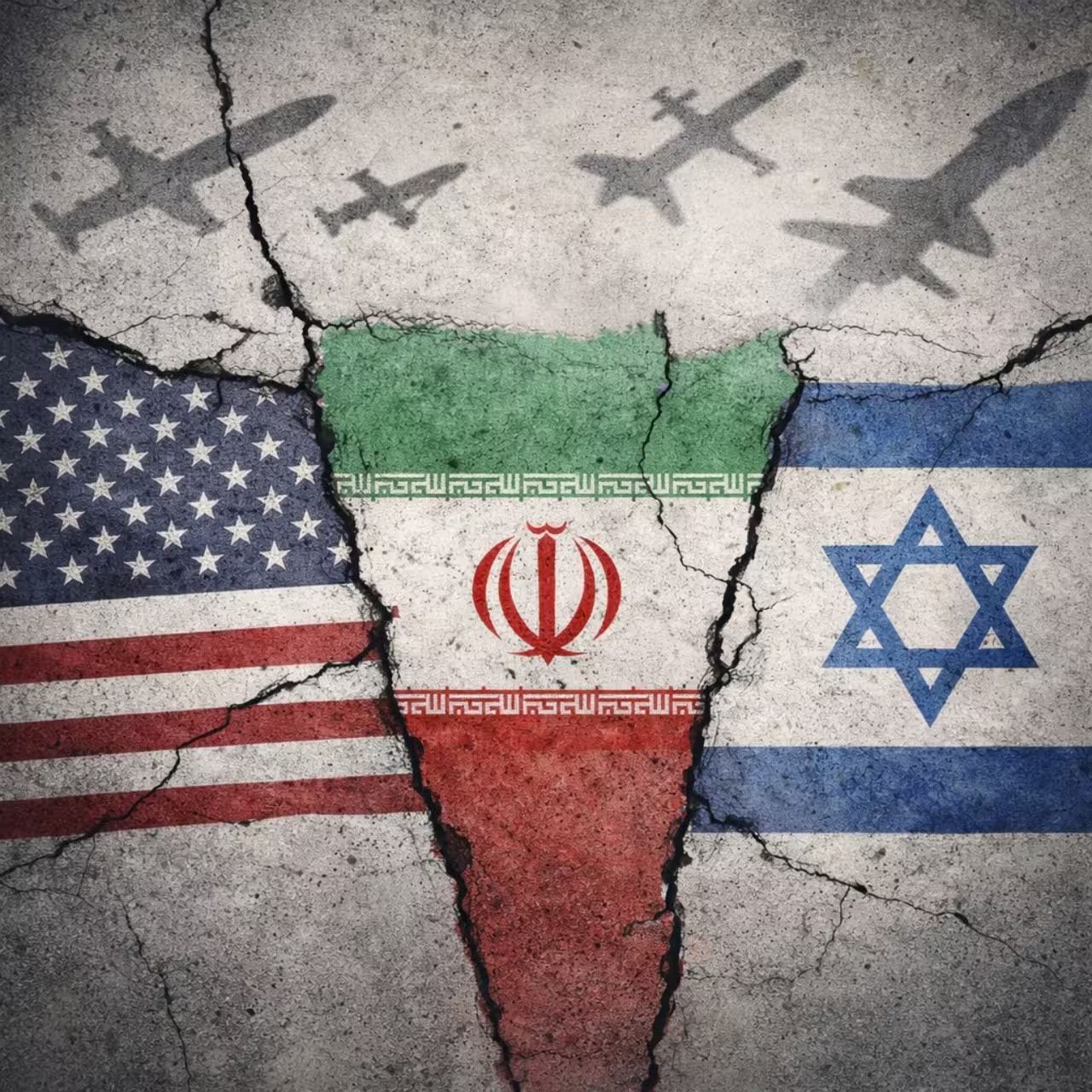
Crisis Strategy in an Era of Escalation
The current escalation of tensions across the Middle East has rapidly evolved from a regional security issue into a broader geopolitical risk with global implications. While governments focus on military and diplomatic responses, organisations operating internationally face a parallel challenge: managing the commercial, operational, and reputational consequences of geopolitical instability.
For many companies, particularly those with supply chains, investments, or partnerships across Europe, the Gulf, or Asia, the present environment introduces a new layer of uncertainty. Escalation between regional actors, the involvement of major powers, and the potential for disruption to energy markets all create conditions in which corporate crises can emerge quickly and unpredictably.
In this environment, the difference between disruption and crisis often lies in strategic preparedness.
The Expanding Corporate Risk Landscape
Historically, geopolitical conflict was treated by many organisations as a distant risk–relevant primarily to defence contractors, energy companies, or governments. Today, the interconnected nature of global markets means that geopolitical shocks cascade rapidly across sectors.
Companies now face multiple forms of exposure:
Supply chain disruption
Shipping routes, logistics hubs, and energy infrastructure across the Middle East remain vulnerable to disruption. Even indirect exposure through suppliers can quickly impact operations.
Regulatory and sanctions risk
As geopolitical tensions escalate, governments often respond with new sanctions regimes, export controls, or compliance requirements. Companies operating across multiple jurisdictions must navigate these changes carefully.
Reputational scrutiny
Corporate relationships in politically sensitive regions can attract heightened media and stakeholder attention. Decisions that were previously viewed as commercial may suddenly become reputationally sensitive.
The Reputation Dimension
While operational risk often receives immediate attention during geopolitical crises, reputational exposure can be equally significant.
Companies may face pressure from multiple stakeholders simultaneously:
- investors concerned about geopolitical exposure
- customers and the public scrutinising corporate relationships
- regulators reviewing compliance and governance
- employees seeking clarity on organisational values and positioning
The reputational challenge lies in balancing commercial realities with public perception. Organisations that respond reactively often find themselves navigating criticism from multiple directions at once.
A disciplined strategy requires anticipating how decisions will be interpreted across different audiences.
Crisis Management at Board Level
In periods of geopolitical escalation, crisis management increasingly becomes a board-level responsibility rather than an operational matter.
Boards and executive teams should focus on several strategic priorities:
Mapping exposure
Understanding direct and indirect exposure to affected regions, including suppliers, partnerships, and regulatory obligations.
Scenario planning
Developing clear response strategies for potential escalation scenarios, including sanctions changes, supply chain disruption, and reputational scrutiny.
Decision discipline
Establishing clear governance processes so that strategic decisions can be taken quickly without creating unnecessary reputational risk.
Stakeholder communication
Ensuring messaging to investors, regulators, employees, and customers is aligned and consistent.
Organisations that address these issues early are far better positioned to navigate periods of geopolitical instability.
Strategy Before Crisis
One of the most consistent patterns in corporate crises is that the most damaging outcomes rarely arise from the initial event itself. Instead, they develop from delayed decisions, misaligned messaging, or poorly coordinated responses.
Geopolitical escalation rarely follows a predictable path. However, organisations that approach these situations with a disciplined strategic framework are able to respond with greater clarity and confidence.
For companies operating internationally, the question is no longer whether geopolitical risk will affect corporate operations. The question is how prepared leadership teams are to manage it when it does.

